
INTERNATIONAL WOMEN’S DAY 2026: AN OCEAN OF POLICY-BILITIES
The First Drop
Meet Amaka, a 35-year-old Nigerian woman. According to Nigerian law, she is an adult, old enough to vote, be voted for and appointed to political positions. Amaka has been a member of a political party since she was 18 and voted in all the elections that have occurred in the 16 years that followed her 18th birthday. She is qualified too, much more so than the other individuals seated, legs spread, bellies bobbing in the newly elected president’s house, throwing back expensive whisky and spitting out, “Congratulations sah.”
She doesn’t want to be here, among this bunch of lickspittles and genuflecting individuals, but everyone seems to say the same thing: if you’re not there, the President won’t know you; if he doesn’t know you, how would he appoint you? Even though she has wondered several times why he needs her presence to know that she has spent the last 15 years of her life advocating for women’s rights, when all he needed to do was a quick Google search. If he had been paying attention, he would already know that gender-based violence prosecutions in several states were on the rise because of her; skill centres that focused on girl-child empowerment had flooded parts of the country because of her. It shouldn’t be hard for the President to “know” her. The reason she agreed to join this gathering regardless, was that she knew the fate of all she had worked on hinged on policies.
Policies rely on the right people, occupying the right seats, putting in the right work. Scanning the room, she took in the small crowd of people around her, who were mostly men; she knew that any appointment they got would be their reward for ensuring the president’s election, not because the positions or portfolios meant anything to them. In the one hour she had been here, she had been flashing her best smile and adjusting in her seat repeatedly. Yet, the president had barely paid attention to her. When she was introduced, he mispronounced her name. She knew then, even without being told, what exactly would happen. Nothing! She wouldn’t get the appointment she needed to help increase the extent of impact her work would have. This appointment, that would be crucial for her career advancement. She should fight, but she’s already weakened by the result. When will the war be won, even if she wins this battle?
Amaka’s story is about a drop in the ocean. But the ocean—
The Ocean
The National Gender Policy in Nigeria advocates for 35 per cent affirmative action for women in political appointments. In fact, the 2021 revision dares to push for the “adoption of gender affirmative action of 50:50 parity in all elective and appointive positions”. This policy pushes for gender mainstreaming in public policy, but sometimes, it is mostly all talk. Here is what it means. If we are going with 35%, it means that for every appointment of, say, ten people, at least 3 or 4 must be women. But is that the case?
As Amaka and a few others have seen, when it comes to appointments, it’s really a man’s world. At the swearing-in of cabinet members after the last elections, only eight out of the entire 48 appointees were women. Approximately 16.7%. Not near a pass mark. According to The Guardian of 16th October 2015, out of the 37 ministerial nominees, only a ‘miserly six’ women were appointed ministers. This number equals less than 17 per cent—barely half of the 35 per cent that the National Gender Policy advocates for. At the end of the tenure’s first term, four years later, there was no significant change; the situation remained unchanged.
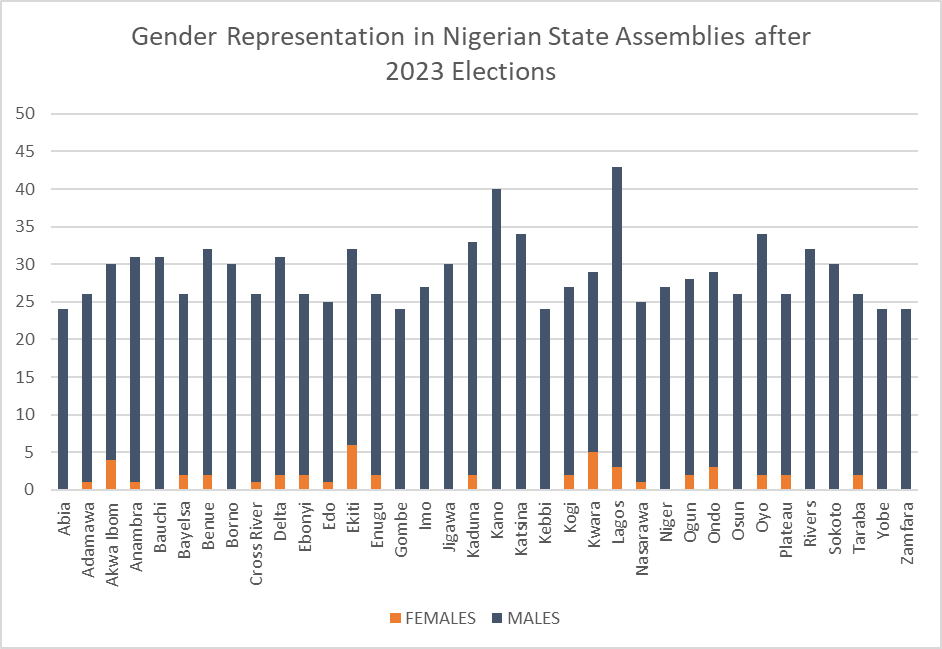
As reported by Daily Trust, following the 2023 elections, of the 990 state assembly seats across the 36 states of the federation, only 48 women (4.8%) were elected. There were up to 15 states with zero female representation.
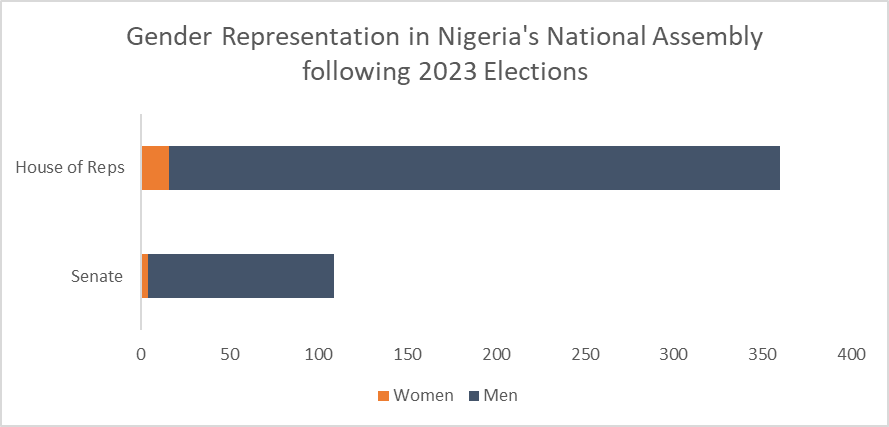
The case was not very different in the National Assembly, with only 4 out of the 109 seats in the Senate, and 16 of the 360 House of Representatives seats being occupied by women. Cumulatively, that adds up to 20 of 469 seats being occupied by women, which is 4.3%. With a target of 35 to 50 per cent, we are quite far off.
Another African country that has an affirmative action target like Nigeria is Rwanda. The Rwandan constitution requires a minimum of 30% of parliamentary seats to be reserved for women. However, unlike the giant of Africa, they have far exceeded their target. Presently, women make up 63.8% of the Chamber of Deputies (Lower House of Parliament), 46.2% of the Senate (Upper House of Parliament), 44% of the Judiciary and 40% of Councillors in Rwanda.
You may start to think that this ‘constant nagging’ is all about putting a gender in these positions just for the sake of it. Far from it. How, you may ask? Let me break it down for you. Feel free to grab a seat.
A study that sampled data from over 182 countries over 221 years found that women’s political empowerment is positively related to subsequent economic growth. The International Monetary Fund (IMF) postulates that closing the gender gap could boost GDP in Canada and Japan by 4%, Pakistan by 30%, and Niger by 32%. The World Economic Forum also reports that a 10% increase in women’s parliamentary representation is associated with a 0.7% percentage point increase in GDP growth. Considering Nigeria’s current economic situation, we most likely have to go beyond a 10% increase.
Similarly, a global study conducted by the United Nations Women found that women’s participation increased the probability of a peace agreement lasting at least two years by 20%, and increased the probability of a peace agreement lasting 15 years by 35%. In 2025, Iceland was ranked the most peaceful country by the Global Peace Index for the 18th consecutive time. Well, guess what Iceland has been doing right? Iceland, with about 50% female representation in its parliament, also ranked first place in the 2023 Global Gender Gap rankings, having closed 91.2% of its gender parity gap.
By not fully implementing these policies, it is not too hard to see that it is not just women who are losing; it is the entire country that is missing out on the unique perspectives women bring, the competence they offer, the economic growth and eventually on the improved standard of living we would all get to benefit from. Eventually, Nigeria loses many of its women, many of whom grow tired of facing the glass ceiling and move to countries where they can dare to dream without disappointment.
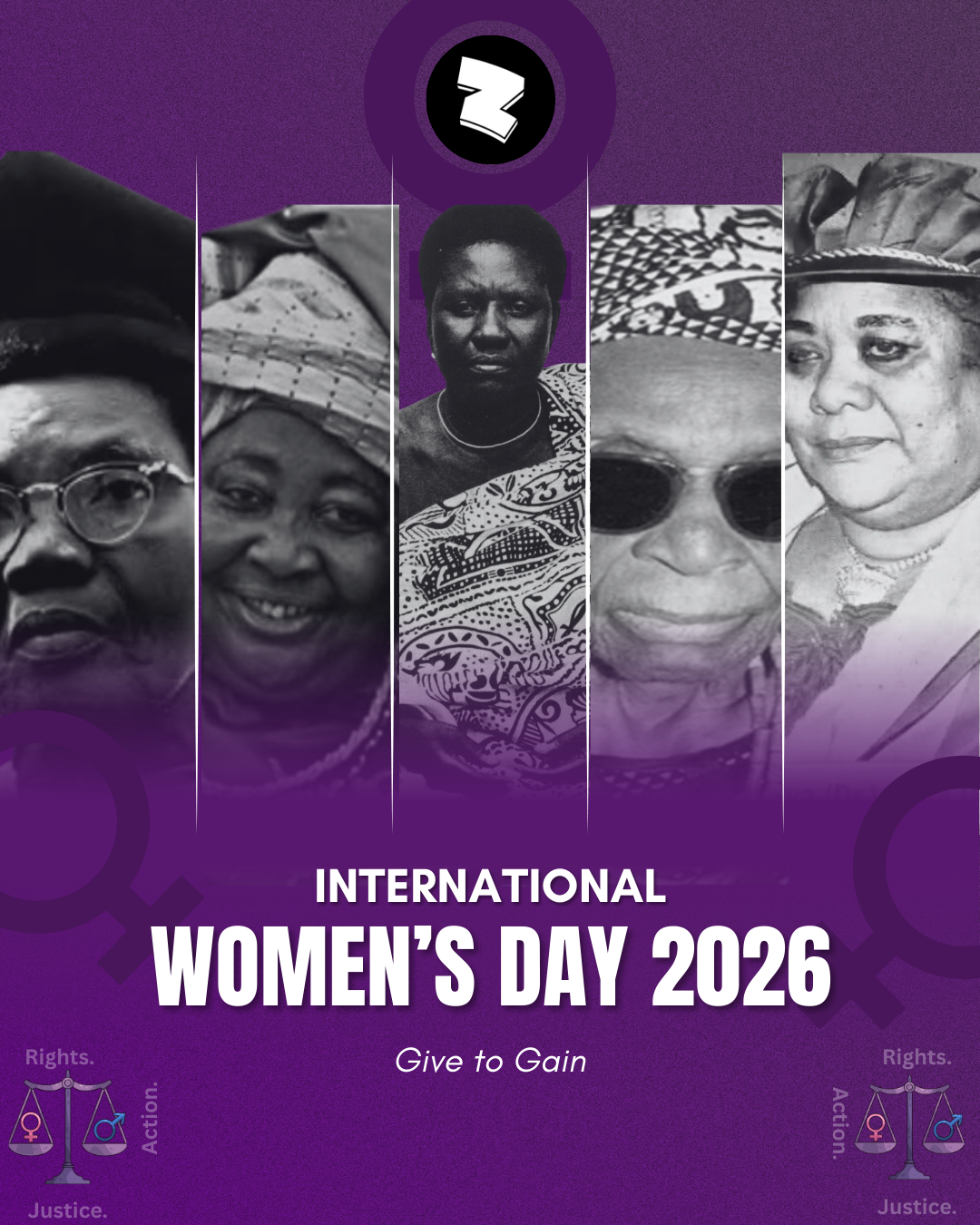
This is why we at PoliZ are thrilled that this International Women’s Day, the United Nations Women’s focus is on “Rights. Justice. Action. For ALL women and girls.”
According to the United Nations, this theme calls for three things: the dismantling of structural barriers, ensuring access to justice, and enforcing laws that protect women and girls worldwide. Amaka and the many women who have been ignored over the years would tell you—with their fists raised, their faces lit with a knowing smile—that this is just what they need. This theme is exactly what they have been clamouring for.
The year is 2026, almost a century after women in Aba, Eastern Nigeria, smashed their way through the barriers erected—not so much physically, but structurally—by a predominantly patriarchal society. Many of the women, perhaps in the moments before their death, nursed the idea that the world they were leaving behind was one where the gains of their protest would be long-lasting, that in the future women would have access to justice, and that protection would be afforded by laws that favoured women too. A glimpse of the current rather grim reality would send them reeling back to the grave because very little has changed since those years.
Yet women like Amaka are not the only ones hoping that the next International Women’s Day would be more than just hoping and wishing. That it would be more about consolidating, more about actualising.
A New Ocean?
So what can be done, other than dumping these sadistic statistics on your lap or having march-pasts and fiery speeches every March? At PoliZ, we support the small actions that can lead to significant change. The tiny drops of water, which on their own can’t do much, but when combined together make up the vast and boisterous ocean.
What do we think this means? Walk or maybe run with us.
The global International Women’s Day theme for the year 2026 is “Give to Gain”.
We have covered some aspects of what we need to give and what we stand to gain, but that was only the tip of the iceberg. When we give women like Amaka the affirmative action they need, they will not have to rely on men’s whims to secure positions that they will wield to drive growth and development.
And what does this year’s theme mean for the citizenry who have been called to give so they can enjoy these gains, but perhaps cannot yet influence policies directly?
It means that you, the female reader, should put forward your name or the names of other qualified women whenever an opportunity arises. It means that if you know a favourite influencer, an active church sister, or an Alhaja who does a lot for women but unfortunately lives in a remote area, you should nominate them for appointments and share their stories on your platform.
It means that we should ask questions of our leaders, beginning at the grassroots, about policies and laws affecting women and what they are doing to improve them. By doing so, we amplify Nigerian women’s voices and help pave the way for a more inclusive society. Engaging with our communities and advocating for those who are often overlooked can lead to meaningful change and inspire others to take action as well. As a woman, you have a right to demand that women fill those empty but deserving chairs in every space available. Equal opportunity dictates that in a room of ten, there should be five women, but let’s start by aiming for 35%. This means that 3-4 spots of 10 should be occupied by women. It means running for office or voting for competent women who do. It is as simple as ensuring minor alterations that would cause major elevations in the lives of people like Amaka, and consequently, several other women.
For men, it means rising up against the imbalance and standing up for women who deserve a seat at the table. It means raising sons who view women not as rivals or stooges, and who do not see leadership as exclusively a male domain. It means educating your friend who tweeted, “I would rather vote for a goat than vote for a woman to be Nigeria’s President”, because such comments can transform into harmful narratives. Such narratives solidify realities where policies are enacted but not implemented.
To give so that women can gain, as the theme of International Women’s Day indicates, is to give the intangible first before the tangible. It means to give the immeasurable before the measurable. It is to be generous with our attention and devotion to women’s rights all over the world. It is to strive to ensure that this year’s International Women’s Day becomes the last one where we remain in the dark about policies that affect Nigerian women.
We have seen that it is one battle to fight for the right policies and laws to be passed. It is another one to insist that after that, they do not like our affirmative action policy remains as mere suggestions, but are implemented to the letter. We understand that change takes time, but we also understand that a lot can change even in the shortest time. Whether your give is something as simple as following PoliZ’s International Women’s Day Campaign to learn about the policies and laws that should concern you, or something as grand as sponsoring Nigeria’s first Workplace Sexual Harassment Act as a legislator, you are making a difference to our collective gain. Your gender equality campaigns just might get Amaka elected or appointed in 2027 alongside other qualified women.
Yes, women deserve and need to have equal opportunities. However, more importantly, society needs women to have them too. What should this piece do to you? Incite sadness, anger, resolve? Maybe none, maybe all. But if it does all of these without a corresponding action, one thing is certain: we will all be back here in the next year, reading another piece, attending another webinar or conference, turning another slogan in our tongue, and listening to the exact same policies.
Happy International Women’s Day, from all of us at PoliZ.




I came back to read this, and it is truly brilliant. Hopefully action is taken so that we don’t keep going over the same issues like a broken record.